
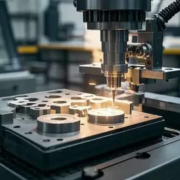
Precision Rapid Prototyping CNC Machining for Industrial Applications
In today’s competitive manufacturing landscape, rapid prototyping CNC machining has become an essential solution for companies that need highly accurate prototypes in a short time. Industries such as aerospace, automotive, electronics, robotics, and medical manufacturing rely on CNC machining to transform digital designs into precise physical parts. This process allows engineers to test fit, function, and performance before committing to full-scale production.
Unlike traditional prototyping methods, CNC machining offers exceptional dimensional accuracy and material versatility. Engineers can create prototypes using production-grade metals and plastics, ensuring that the prototype behaves exactly like the final product. With shorter lead times, tight tolerances, and repeatable results, rapid prototyping CNC machining is a cornerstone of modern industrial innovation.
What Is Rapid Prototyping CNC Machining?
Rapid prototyping CNC machining is the process of using computer-controlled cutting tools to manufacture prototype parts directly from CAD files. It enables businesses to produce functional models quickly and accurately, making it ideal for design validation and engineering testing. This approach eliminates the need for expensive molds or tooling, reducing development costs and accelerating product launches.
Because CNC machines can work with industrial-grade materials, prototypes are not just visual models—they are fully functional parts. This is especially important in industries where strength, durability, and precision are critical. Whether testing a turbine component or a custom enclosure, rapid prototyping CNC machining provides dependable and repeatable results.
Key Features of Rapid Prototyping CNC Machining
- Produces highly accurate and repeatable parts
- Supports metals and engineering plastics
- No tooling or mold costs required
- Suitable for functional and end-use testing
- Fast turnaround times, often within days
- Compatible with complex geometries
Benefits of CNC Machining for Industrial Prototypes
One of the biggest advantages of rapid prototyping CNC machining is precision. CNC equipment can achieve tolerances as tight as ±0.001 inches, ensuring that every component matches design specifications. This level of accuracy is vital for assemblies where even minor deviations can cause performance issues or safety concerns.
Another significant benefit is speed. Manufacturers can move from CAD design to finished prototype in a matter of days. This accelerated development cycle enables engineers to identify design flaws early, make improvements, and reduce costly revisions later in production. Faster prototyping ultimately shortens time-to-market and enhances competitiveness.
Major Advantages for Industrial Applications
- Tight tolerances for mission-critical components
- Faster design iterations and modifications
- Lower development and tooling costs
- Improved product reliability
- Enhanced collaboration between engineering teams
- Reduced risk before mass production
Materials Used in Rapid Prototyping CNC Machining
A major strength of rapid prototyping CNC machining is its compatibility with a wide range of industrial materials. Aluminum is commonly used due to its excellent machinability and lightweight properties, while stainless steel is preferred for corrosion resistance and structural strength. Titanium is often selected for aerospace and medical applications because of its high strength-to-weight ratio.
Engineering plastics such as ABS, Delrin, PEEK, and Nylon are also popular for prototypes requiring electrical insulation, chemical resistance, or reduced weight. Since prototypes are produced from the same materials used in production, testing results are far more accurate and reliable than those achieved with lower-grade materials.
Common Materials for CNC Prototypes
- Aluminum 6061 and 7075
- Stainless Steel 304 and 316
- Titanium Grade 5
- Brass and Copper
- ABS and Polycarbonate
- Delrin (POM) and Nylon
- PEEK for high-temperature applications
Industrial Applications of Rapid Prototyping CNC Machining
The aerospace industry uses rapid prototyping CNC machining to create lightweight structural components, brackets, and housings for testing. Precision and reliability are critical in aerospace, making CNC machining an ideal prototyping method. Engineers can evaluate aerodynamics, stress resistance, and assembly compatibility before approving designs for production.
In the medical sector, CNC-machined prototypes are used for surgical instruments, implant components, and diagnostic equipment. Automotive manufacturers depend on this process to develop engine parts, transmission components, and custom fixtures. Electronics companies also use CNC machining to prototype heat sinks, enclosures, and precision connectors.
Industries That Depend on CNC Prototyping
- Aerospace and defense
- Automotive manufacturing
- Medical device production
- Robotics and automation
- Consumer electronics
- Energy and oil & gas
- Telecommunications
How CNC Prototyping Improves Product Development
Rapid prototyping CNC machining enables engineers to evaluate both design and functionality before investing in production tooling. Physical prototypes reveal issues that may not appear in CAD simulations, such as assembly interference, material weaknesses, or thermal performance concerns. This early validation significantly reduces development risk.
The process also supports iterative design improvements. Engineers can make adjustments to dimensions, material choices, or geometries and receive updated prototypes within days. This flexibility promotes innovation and allows manufacturers to refine products until they meet exact performance requirements.
Product Development Advantages
- Real-world performance testing
- Faster engineering feedback loops
- Easier design optimization
- Reduced production errors
- Improved manufacturability
- Greater confidence in final designs
Choosing the Right Rapid Prototyping CNC Machining Partner
Selecting a qualified CNC machining provider is essential for achieving the best results. A reliable supplier should offer advanced 3-axis and 5-axis machining capabilities, strict quality control, and experience in your industry. Their engineering team should be able to recommend material options, optimize designs, and maintain tight tolerances.
Lead time and communication are equally important. The right partner will provide clear timelines, responsive support, and scalable services from one-off prototypes to low-volume production. Certifications such as ISO 9001 can also indicate a commitment to quality and process consistency.
What to Look for in a CNC Machining Supplier
- Expertise in industrial prototyping
- Wide range of materials
- Tight tolerance capabilities
- Fast turnaround times
- Quality certifications
- Design-for-manufacturing support
- Competitive pricing
Conclusion
Rapid prototyping CNC machining is an indispensable technology for industrial applications requiring speed, accuracy, and material authenticity. It enables manufacturers to create functional prototypes that mirror production parts, allowing for precise testing and validation before mass production begins.
From aerospace and medical devices to automotive and robotics, industries around the world rely on this process to reduce development costs, improve product quality, and accelerate innovation. By partnering with an experienced CNC machining provider, businesses can transform concepts into high-performance prototypes and bring products to market with greater confidence and efficiency.