
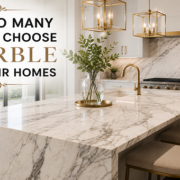
Why So Many Clients Choose Marble for Their Homes
When I help people compare countertop materials, marble often creates the strongest first impression. Its soft colors, flowing veins, and natural shine can make an ordinary room feel more polished. Moreover, no two marble slabs look exactly alike. Therefore, each finished surface has its own character.
At Keystone Granite Oh, I often see homeowners choose marble because they want more than a basic work surface. They want a material that adds personality, warmth, and lasting beauty. For homes in Dublin, Columbus, Ohio, marble can fit traditional kitchens, modern bathrooms, elegant entryways, and many other spaces.
However, marble is not only popular because of its appearance. It can also handle many years of use when homeowners understand its care needs. In addition, it works with a wide range of cabinet colors, flooring styles, and interior themes. As a result, many clients keep marble near the top of their material list.
Key Takeaways
- Marble offers natural patterns and colors that make every countertop look different.
- The material can add value, elegance, and a timeless feeling to kitchens and bathrooms.
- Proper sealing and simple daily care can help marble stay attractive for many years.
Marble Gives Every Room a Natural, One-of-a-Kind Look
One of the main reasons clients choose marble is its natural beauty. A manufactured surface may repeat the same pattern several times. However, real marble forms inside the earth, so every slab has its own veins, marks, and color movement.
When I work with a skilled marble countertop installer in Columbus, I can see how proper slab selection and placement affect the final design. A good layout can highlight bold veins on an island, create smooth movement across a long counter, or match patterns along a visible seam.
Marble comes in many colors as well. Although white marble remains very popular, homeowners can also find shades of gray, cream, beige, brown, green, and black.
Popular design choices may include:
- White marble with soft gray veins
- Cream marble with warm gold movement
- Gray marble with bold white lines
- Black marble with bright contrasting veins
- Beige marble with quiet natural patterns
Because every slab looks different, clients can choose a surface that feels personal. Therefore, marble does not make a home look copied from a catalog. Instead, it gives the room a more individual style.
Marble Creates a Bright and Open Feeling
Many homeowners want kitchens and bathrooms to feel larger, brighter, and cleaner. Marble can help create that effect, especially when clients choose a light-colored slab.
White and cream marble reflect light across the room. As a result, a small kitchen may feel more open. Likewise, a bathroom with limited natural light can feel fresher and more inviting.
I often pair light marble with:
- White or cream cabinets
- Natural wood cabinets
- Soft gray walls
- Gold or brass fixtures
- Black handles and faucets
- Warm wood flooring
These combinations can create a balanced design. For example, white marble can soften dark cabinets. Meanwhile, warm marble veins can connect naturally with wood tones.
Additionally, the polished surface of marble can reflect light from windows, pendant lights, and under-cabinet lighting. Therefore, the room may feel brighter without adding more fixtures.
Marble Works With Many Home Styles
Another reason clients choose marble is its design flexibility. It can look formal and luxurious, but it can also feel relaxed and natural.
In a traditional kitchen, marble works well with raised-panel cabinets, decorative trim, and detailed hardware. On the other hand, in a modern kitchen, the same material can pair with flat cabinets, simple handles, and clean lines.
I also see marble used in:
- Farmhouse kitchens
- Transitional interiors
- Modern bathrooms
- Classic powder rooms
- Luxury primary bathrooms
- Fireplace surrounds
- Bar areas
- Laundry rooms
- Entryway tables
Therefore, homeowners do not need to redesign the entire house around the countertop. Instead, they can choose a marble color and pattern that supports the style they already have.
Moreover, marble can help connect older and newer design features. For example, a homeowner may keep traditional wood cabinets but add modern lighting and simple hardware. A well-chosen marble surface can bring those different details together.
Marble Can Make a Kitchen Feel More Valuable
Countertops cover a large visual area in most kitchens. Therefore, the material can strongly affect how the entire space feels.
When clients walk into a kitchen with marble countertops, they often notice the surface right away. The natural veins draw the eye, while the smooth finish gives the room a more complete appearance.
Because marble has been used in architecture and interior design for centuries, many people connect it with quality and lasting value. As a result, it can make a kitchen feel more established and carefully designed.
However, the final effect depends on more than the slab. Edge style, cabinet color, backsplash selection, and lighting also matter.
Common marble edge choices include:
- Eased edge: Clean, simple, and easy to match
- Beveled edge: Adds a small decorative detail
- Bullnose edge: Creates a soft, rounded look
- Ogee edge: Offers a more formal and traditional style
- Mitered edge: Makes the countertop appear thicker
I usually recommend choosing an edge that matches the overall room. A simple kitchen may look better with an eased edge. Meanwhile, a formal design may support a more decorative profile.
Marble Offers a Timeless Appearance
Home trends can change quickly. Certain colors, patterns, and materials may look popular for a few years and then feel dated.
Marble, however, has remained popular across many design periods. Its natural appearance does not depend on one short-term trend. Therefore, homeowners can update paint, lighting, or cabinet hardware without replacing the countertop.
This timeless quality matters to clients who plan to stay in their homes for many years. They want a surface that will still look attractive after other parts of the room change.
For example, white marble can work with warm wood cabinets today. Later, the homeowner may paint those cabinets navy, green, or white. In most cases, the marble can still fit the updated design.
Additionally, marble patterns tend to feel softer than many bold manufactured designs. Therefore, the material can act as a quiet background or a strong focal point, depending on the slab.
Marble Feels Cool and Smooth
Marble naturally stays cooler than many other surfaces. This feature can be useful in kitchens, especially for people who enjoy baking.
A cool countertop can make it easier to work with dough, pastry, chocolate, and other ingredients that react to heat. Therefore, some homeowners choose marble for a baking area even when they use another material in the rest of the kitchen.
The smooth surface also feels pleasant under the hands. In addition, polished marble can create a clean and refined appearance.
However, homeowners can also select a honed finish. Honed marble has a softer, less reflective surface. It may help hide small scratches and create a relaxed look.
The two common finishes include:
Polished Marble
Polished marble has a shiny surface that reflects light. It also makes colors and veins look stronger. Therefore, it works well in formal kitchens and bathrooms.
Honed Marble
Honed marble has a smooth but matte appearance. It creates less glare and may feel more natural. As a result, it often suits casual, modern, or farmhouse interiors.
The better choice depends on how the room will be used and how much shine the homeowner prefers.
Marble Can Be Used Beyond Kitchen Countertops
Although kitchen countertops remain one of the most common uses, marble can improve many other parts of a home.
In bathrooms, it can create an elegant vanity top. It can also appear on shower walls, tub surrounds, shelves, or decorative areas.
Around a fireplace, marble can add a clean frame and help the feature become the center of the room. Likewise, a marble tabletop or bar surface can make a smaller area feel more special.
I often see marble used for:
- Kitchen islands
- Bathroom vanities
- Shower walls
- Fireplace surrounds
- Bar countertops
- Coffee stations
- Baking areas
- Window sills
- Shelves
- Decorative wall panels
Using marble in more than one area can also create design flow. For instance, the same material may appear on a kitchen island and a nearby fireplace. As a result, the open living space can feel more connected.
Marble Pairs Well With Popular Cabinet Colors
Countertops and cabinets need to work together. Fortunately, marble offers enough color variation to match many cabinet finishes.
White cabinets can create a bright and clean design with gray-veined marble. Meanwhile, natural wood cabinets can bring warmth to a cooler white slab.
Dark cabinets can also create strong contrast. For example, black, navy, or deep green cabinets may look striking under a light marble countertop.
I consider the following details when matching marble with cabinets:
- The main slab color
- The vein color
- The cabinet undertone
- The flooring color
- The backsplash
- The room’s natural light
- The hardware finish
For homes in Dublin, Columbus, Ohio, many clients want a design that feels current but not overly trendy. Therefore, neutral marble with natural movement can be a safe and attractive choice.
Marble Can Last for Many Years
Marble has a long history in buildings, sculptures, and homes. Therefore, we already know that it can last for generations when it receives proper care.
Still, marble is softer and more porous than some other countertop stones. It can scratch, stain, or etch if homeowners do not protect it.
Fortunately, regular care is not difficult. I recommend a few simple habits:
- Seal the surface as recommended.
- Wipe spills quickly.
- Use cutting boards.
- Place hot pans on trivets.
- Avoid harsh or acidic cleaners.
- Use soft cloths for daily cleaning.
- Place coasters under drinks.
Acidic foods and liquids, such as lemon juice, vinegar, and tomato sauce, may affect the finish. Therefore, quick cleanup helps protect the surface.
Also, cutting directly on marble can leave marks and dull kitchen knives. A cutting board protects both the countertop and the knife.
With these habits, marble can keep its natural appeal for many years. Moreover, some homeowners enjoy the gentle patina that forms over time because it adds character.
Understanding Marble Maintenance Helps Clients Decide
I believe clients should understand both the benefits and care needs before choosing any material. Marble offers beauty and long-term value, but it does need more attention than some engineered surfaces.
For daily cleaning, warm water and a mild, stone-safe cleaner usually work well. Harsh products may damage the finish, so I avoid cleaners that contain strong acids or rough particles.
Sealing also matters. A sealer does not make marble completely stain-proof. However, it gives homeowners more time to wipe up spills before they enter the stone.
The sealing schedule can depend on:
- The type of marble
- The stone’s porosity
- The finish
- The amount of daily use
- The sealer product
Therefore, homeowners should follow professional guidance instead of using one schedule for every slab.
Choosing the Right Marble Slab Matters
Two marble slabs from the same stone type can still look very different. One may have soft, quiet veins, while another may have bold movement.
For that reason, I encourage homeowners to view the full slab whenever possible. A small sample may not show the complete pattern or color range.
When selecting a slab, I look at:
- Vein direction
- Large color changes
- Natural marks
- Available slab size
- Countertop layout
- Seam locations
- Island dimensions
- Backsplash plans
If a kitchen has a large island, a bold slab can turn it into a focal point. However, a smaller kitchen may benefit from a quieter pattern.
It also helps to compare the slab with cabinet doors, flooring samples, paint colors, and hardware. Therefore, clients can see how the materials work together before making a final decision.
Professional Fabrication Makes a Major Difference
A high-quality slab still needs accurate measurement, cutting, polishing, and installation. Poor workmanship can lead to visible seams, uneven edges, weak support, or poor alignment.
Professional fabricators plan the layout carefully. They also decide how the veins will flow across corners, seams, and cutouts.
This process becomes especially important around:
- Sinks
- Cooktops
- Faucets
- Corners
- Wall changes
- Waterfall edges
- Large islands
A skilled team also checks cabinet support and countertop level. Therefore, the stone can rest on a strong, level base.
When homeowners compare countertop suppliers in Columbus, I recommend looking beyond the slab price. Material knowledge, measuring, fabrication quality, and installation experience all affect the final result.
Common Concerns Clients Have About Marble
Clients often ask whether marble is too delicate for daily use. My answer depends on their expectations and habits.
Marble can develop small marks over time. However, many homeowners see those changes as part of the natural character of the stone.
Other clients want a surface that stays almost unchanged. In that case, they may prefer a harder or less porous material.
Common concerns include:
Will Marble Stain?
Marble can absorb liquids if spills remain on the surface. However, sealing and quick cleanup reduce the risk.
Does Marble Scratch?
Sharp or rough objects may scratch it. Therefore, cutting boards and protective pads help.
Can Heat Damage Marble?
Marble handles normal warmth well. Still, I use trivets under hot cookware to protect both the stone and its finish.
Is Marble Hard to Clean?
Daily cleaning is simple. A soft cloth, warm water, and stone-safe cleaner usually handle most messes.
Does Marble Need Sealing?
Most marble countertops benefit from sealing. However, the exact schedule depends on the stone and its use.
Final Thoughts
So many clients choose marble because it offers something difficult to copy: natural beauty with real depth and character. Every vein, shade, and mark comes from the stone itself.
Moreover, marble can brighten a room, match many cabinet styles, and remain attractive through changing design trends. It can work in kitchens, bathrooms, fireplace areas, bars, and other parts of the home.
For homeowners in Dublin, Columbus, Ohio, marble can provide a strong mix of elegance, function, and lasting appeal. However, the best results come from choosing the right slab and understanding its care needs.
In the end, I believe marble suits homeowners who value natural materials and do not mind simple maintenance. With careful selection, professional fabrication, and regular care, marble can become one of the most memorable features in a home.