

ECG Interpretation Training – Complete Guide to Skills, Certification & Career Benefits
ECG interpretation training is an essential skill for healthcare professionals involved in patient assessment and cardiac monitoring. With cardiovascular disease remaining one of the leading causes of hospital admissions in the UK, the ability to accurately read and interpret an electrocardiogram (ECG) is more important than ever. Whether you are a nurse, healthcare assistant, paramedic, or clinical support worker, structured ECG interpretation training can significantly enhance your clinical confidence, decision-making, and career progression.
This guide explains what ECG interpretation training involves, what you will learn, who it is for, and why a CPD-certified 1-day ECG course is a smart investment for healthcare professionals.
What Is ECG Interpretation Training?
ECG interpretation training focuses on teaching healthcare professionals how to analyse heart rhythms and electrical activity using ECG traces. Unlike basic ECG recording, which involves placing electrodes and running the test, ECG reading and interpretation require clinical knowledge and pattern recognition.
A structured ECG interpretation course in the UK covers both theoretical understanding and practical skills, enabling learners to recognise normal heart rhythms, identify abnormalities, and escalate concerns appropriately. This type of cardiac monitoring training is widely used in hospitals, clinics, GP practices, and emergency care settings.
What You’ll Learn in ECG Interpretation Training
One of the main benefits of ECG interpretation training is its comprehensive skill development, even within a short timeframe.
Core ECG Interpretation Skills
During the course, learners develop strong clinical ECG skills, including correct ECG lead placement training and understanding how lead positioning affects ECG readings. You will also learn ECG waveform analysis, focusing on P waves, QRS complexes, T waves, intervals, and segments.
Heart rhythm interpretation is a key part of the training, helping you differentiate between normal sinus rhythm and irregular patterns. These foundational ECG skills are essential for safe and effective patient care.
Recognising Normal and Abnormal ECGs
The course covers both basic ECG interpretation and more complex patterns. You will learn ECG abnormalities recognition, including arrhythmias, conduction defects, and signs of cardiac distress. This knowledge supports early detection and improves clinical decision-making in real-world healthcare environments.
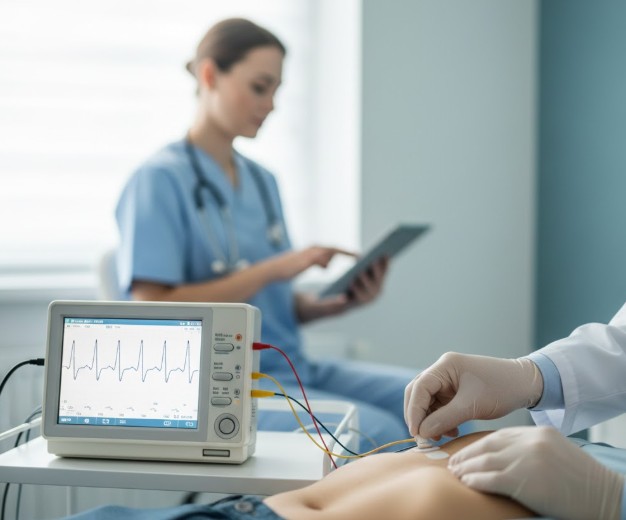
Practical ECG Training – Hands-On Learning
High-quality ECG interpretation training always includes practical ECG training. Hands-on learning allows participants to apply theoretical knowledge to real ECG strips and clinical scenarios. This practical approach builds confidence and ensures learners can translate knowledge into everyday practice.
Practical ECG interpretation training is especially valuable for healthcare professionals who regularly monitor patients, as it strengthens accuracy and reduces uncertainty when assessing ECG results.
1-Day CPD ECG Training Course – What to Expect
A 1-day ECG course is designed to deliver focused, high-impact learning in a short period. Despite the short duration, the course is structured to cover essential ECG interpretation skills without overwhelming learners.
Participants can expect:
- Clear explanations of ECG fundamentals
- Guided ECG reading and interpretation exercises
- Case-based discussions
- A recognised CPD ECG training certificate upon completion
A CPD certified ECG interpretation course is ideal for busy healthcare professionals who want to upskill quickly while meeting professional development requirements.
Beginner to Advanced ECG Interpretation Training
ECG Interpretation Training for Beginners
For those new to ECGs, practical ECG interpretation training for beginners focuses on core concepts, terminology, and rhythm recognition. ECG training for healthcare assistants and support staff ensures a strong foundation without requiring prior ECG experience.
Advanced ECG Interpretation Training
Advanced ECG interpretation training builds on basic knowledge and introduces more complex rhythms and abnormalities. This level is particularly useful for nurses and experienced healthcare professionals looking to enhance their diagnostic confidence and clinical responsibilities.
Who Should Take This ECG Interpretation Course?
ECG interpretation training is suitable for a wide range of healthcare professionals, including:
- Nurses and student nurses
- Healthcare assistants and support workers
- Paramedics and emergency care staff
- Clinical support workers in hospitals and clinics
ECG training for healthcare professionals helps improve patient safety and strengthens multidisciplinary teamwork across healthcare settings.
Benefits of CPD-Certified ECG Interpretation Training
Enrolling in a CPD-certified ECG interpretation training course offers several professional benefits. It supports ongoing professional development, enhances clinical competence, and improves employability within the UK healthcare sector.
Certified ECG training also increases confidence when communicating ECG findings to senior clinicians, contributing to better patient outcomes. Employers value ECG skills training in the UK, as it supports safe and effective cardiac assessment.
ECG Interpretation Course UK – Certification & Recognition
An ECG interpretation course in the UK that is CPD certified meets recognised professional standards. Certification demonstrates your commitment to maintaining up-to-date clinical knowledge and skills.
ECG interpretation training with certification is widely accepted across NHS and private healthcare settings, making it a valuable addition to your professional portfolio.
Career Opportunities After ECG Interpretation Training
Completing ECG interpretation training can open doors to new responsibilities and career progression. Many clinical roles require ECG competence, particularly in acute care, outpatient services, and community healthcare.
Strong ECG skills training in the UK enhances your clinical profile and supports long-term career development in cardiovascular diagnostic training and patient monitoring roles.
Frequently Asked Questions
What do you learn in ECG interpretation training?
You learn ECG waveform analysis, heart rhythm interpretation, ECG abnormalities recognition, and practical ECG skills for real clinical scenarios.
Is a 1-day ECG course enough?
Yes, a well-structured one-day ECG interpretation training course provides essential skills and CPD certification, especially for beginners and intermediate learners.
Is ECG interpretation training CPD certified?
Most professional ECG training courses in the UK are CPD certified, supporting ongoing professional development.
Conclusion
ECG interpretation training is a vital skill for modern healthcare professionals. From ECG lead placement training to advanced rhythm analysis, a CPD-certified 1-day ECG course provides practical, career-enhancing knowledge in a short timeframe.
Whether you are new to ECGs or looking to refine your clinical ECG skills, enrolling in a certified ECG interpretation course in the UK is a smart step toward professional growth, improved patient care, and greater clinical confidence.





Leave a Reply
Want to join the discussion?Feel free to contribute!