
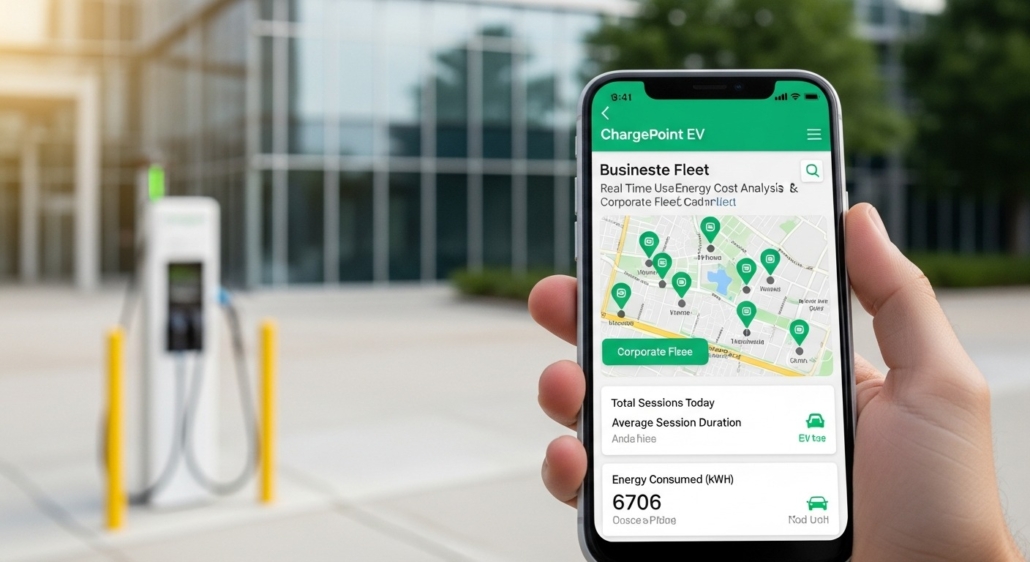
ChargePoint EV App for Businesses: Benefits & ROI
In 2026, investing in a custom EV charging app can considerably boost your commercial enterprise’s operational efficiency and customer engagement. Depending on your wishes, a simple app would possibly run $40,000–$80,000, a mid-degree version ought to cost $80,000–$150,000, and an advanced EV charging answer with analytics, AI, and integrations may additionally attain $150,000–$300,000+. These figures mirror the modern-day marketplace and technological expectations, making it clear that the ROI hinges on thoughtful planning and strategic implementation.
Electric vehicle adoption continues to surge, and groups that provide seamless charging services stand to gain consumer loyalty. The ChargePoint EV app surroundings is at the vanguard of this digital transition, providing systems that help groups manage infrastructure, acquire statistics, and provide intuitive purchaser interactions. Whether you’re a store, place of business, or parking operator, knowing the advantages and ROI of a sturdy EV charging app is now essential.
Powering the Future: Businesses and Electric Vehicles
The shift toward electric automobiles isn’t only a trend; it’s a vital commercial enterprise. With worldwide EV income skyrocketing, companies must adapt. Charging infrastructure has turned out to be a part of the customer adventure, influencing where humans shop, dine, and work.
Here’s where software development services grow to be pivotal. Customized programs can rework static chargers into dynamic engagement gear. A tailored app can tell EV drivers approximately real-time charger availability, offer reservation functions, and even locate stations, all from a telephone. This not only enhances enjoyment, but additionally positions your logo as ahead-thinking and consumer-centric.
Businesses without an app risk losing footfall to competitors who provide smarter, facts-rich interactions that drivers now count on. As EV drivers plan routes around charging points, visibility and accessibility are paramount.
The Pulse of Profit: Enhanced Customer Experience
Delivering an extremely good charging experience starts with convenience. Imagine a consumer arriving at your location with an EV and effects discovering to be had chargers, checking pricing, and beginning a session, at some point of a responsive app. This comfort will become a part of their selection-making procedure.
An EV app that integrates fee gateways, loyalty points, and notifications about charging popularity creates nice touchpoints. Customers can receive alerts while charging is ongoing or while promotions are running in your area. This fosters repeat visits and strengthens emblem affinity.
Moreover, high-quality studies unfold through word-of-mouth and online critiques. Loyal clients regularly share their stories on social platforms, indirectly marketing your business to friends within the EV community.
Data That Drives Decisions: Analytics and Insights
One of the most effective elements of EV charging apps is the statistics they generate. Through user behavior tracking, consultation periods, height hours, and charger utilization, organizations gain insights that are not available through traditional hardware by myself.
Smart dashboards in those apps permit managers to make knowledgeable choices about strength procurement, pricing techniques, and even where to install extra units. For instance, if records suggest excessive midnight usage at a retail location, you would possibly introduce late-night promotions to pressure even more revenue.
These records also facilitate predictive preservation, decreasing downtime by identifying faulty chargers before they disrupt service. The result? Higher uptime, better consumer delight, and a more green operation.
Intelligent Integrations: From Payments to Reservations
Modern EV apps do more than simply locate chargers. They integrate more than one system right into a cohesive person experience. In that manner, charge processors, mapping systems, loyalty platforms, and even company aid planning (ERP) tools can speak to one another via the app.
For businesses, incorporated billing systems ensure certain obvious invoicing. Customers respect having a digital receipt and the capability to view past charging periods. Better but, subscription fashions may be provided for common users, growing predictable recurring revenue.
Reservations are any other sport-changer. Drivers can book a slot in advance, lowering frustration and wait times. This characteristic is especially impactful in high-traffic locations like department stores, airports, and concrete parking garages.
Sustainability Credentials: Going Green with Proof
EV charging isn’t just about comfort; it’s about sustainability. By leveraging an app that displays carbon financial savings, electricity assets, and green utilization statistics, organizations can demonstrate their environmental dedication.
Many customers these days make buying decisions primarily based on sustainability values. The capability to inform a purchaser, “Charging here saves X kilos of CO₂ compared to fuel,” provides tangible meaning for your green initiatives.
Sharing sustainability metrics through your app or advertising channels enhances company social duty (CSR) reporting, appealing to stakeholders and environmentally aware partners alike.
Operational Efficiency: Smarter Management Tools
From a backend attitude, ChargePoint and comparable systems offer centralized management to your network of chargers. Rather than manually monitoring personal gadgets, managers can view overall performance, modify pricing, and troubleshoot remotely.
Such gear lessens exertion charges and streamlines operations. Alerts for outages or upkeep needs are added instantly, permitting speedy responses that minimize carrier disruptions. Your team saves time and avoids unnecessary site visits.
Scalable capabilities, including far-off firmware updates and automatic reporting, similarly reduce administrative overhead. This permits your crew to focus on approach in preference to day-to-day firefighting.
Real-World Use Cases: Success in Action
Consider a shopping center that brought app-based EV charging. Using included promotions, they presented discounts at nearby food shops whilst clients charged their vehicles. The result? A measurable boom in residence time and average sales, as EV drivers spent greater time and money, while ready.
Another example is a company campus that implemented a clever charging platform for personnel. Through the app, workers ought to reserve chargers and monitor their trip carbon savings. This perk became a valued part of their benefits package and helped the organisation attract eco-minded expertise.
These success testimonies emphasize that the app isn’t simply technology; it’s a strategic asset that enhances the complete atmosphere of your enterprise.
Cost vs. Return: Calculating Your ROI
To justify the funding, you need to understand the overall cost and predicted returns. Beyond initial development, don’t forget ongoing preservation, web hosting, updates, and a guide. Partnering with experienced developers ensures your app remains cutting-edge with EV requirements and consumer expectations.
Revenue streams can also include:
- Charging fees
- Premium subscriptions
- Advertising neighborhood promotions
- Data insights (aggregated and anonymized)
- Sponsorships from related manufacturers
When mixed with multiplied foot traffic and consumer retention, the capacity can go back can some distance exceed initial costs, especially as EV adoption continues to grow.
Implementation Best Practices: From Concept to Launch
Begin by defining your enterprise desires. Are you prioritizing user convenience, facts insights, revenue, or emblem loyalty? Aligning targets with app capabilities ensures you make investments accurately.
Next, choose an improvement associate skilled in EV charging ecosystems. Look for groups that recognize both hardware and software program integration. Agile improvement practices permit you to adapt features based on real consumer feedback rather than assumptions.
Lastly, prioritize safety, performance, and accessibility. Your app must load quickly, shield user information, and be intuitive for all styles of customers. A nice first impact ends in better adoption charges.
Final Thought
As the sector hurries up closer to electrification, groups that include smart charging solutions gain an aggressive role. The ChargePoint mobile app and comparable systems empower each operator and driver to make smarter, greener selections.
Investing in a custom EV charging app isn’t only a tech upgrade; it’s a strategic move that enhances customer experience, operational performance, sustainability credentials, and long-term profitability. In 2026 and beyond, the corporations that integrate those answers thoughtfully will shape the future of mobility and trade.


Leave a Reply
Want to join the discussion?Feel free to contribute!