
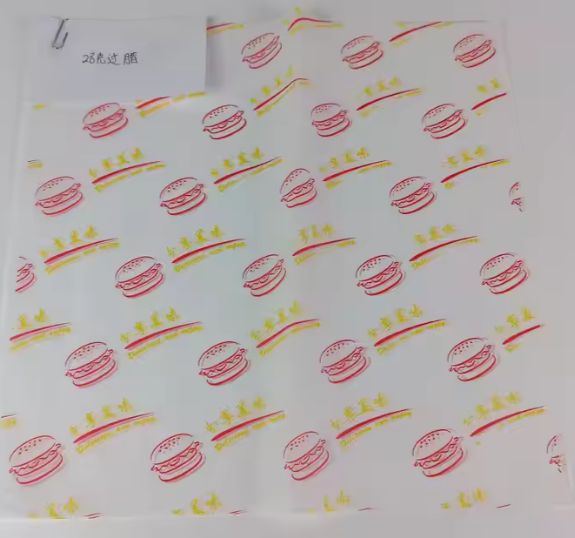
High Quality Custom Cheese Paper for Dairy Branding Needs
Custom cheese paper is significant in contemporary food packaging as presentation, hygiene, and food preservation are all equally significant. It is manufactured to aid in the handling of cheese during production till it is displayed in stores without compromising its texture and appearance. This material is used by businesses to ensure that dairy products are not damaged during storage and transportation without compromising on quality. It also aids in uniformity in packing in various service settings such as delis, supermarkets, and specialty food stores. The need to have reliable wrapping solutions has enhanced the use of custom cheese paper in the professional food industries. It enables brands to present the cheese products in a clean and organised manner without being inconvenienced during day-to-day use.
Storage Design
Dairy products have packaging criteria that must carefully select materials to ensure texture and presentation. Specially designed cheese paper contributes to the maintenance of freshness and attractiveness at deli counters and specialty stores. Product integrity during transit and storage across retail settings is affected by the choice of materials. Various types of cheese wrapping paper are presented in different thicknesses to deal with moisture and odor management in food services. Material consistency facilitates cutting performance and retention of storage in a variety of distribution channels exploited by food suppliers. Controlled handling of packaging under storage system settings enhances product handling.
Branding Focus
In dairy packaging, emphasis on branding is based on the clarity of the surface prints and the adherence of the ink. The large-scale branding consistency across distribution is dependent on commercial suppliers, depending on the wholesale custom cheese paper. Uniformity in typography and alignment of patterns on the packaging surfaces are some of the ways that preserve visual identity. The color density manipulation influences brand recognition and perception of customers at retail outlets. Packaging design architecture helps in consistent communication within various product lines and seasonal changes. The accuracy in placing prints on paper defines readability and shelf impression at a commercial display. The material choice promotes performance in terms of durability and branding when they are handled under stress during transportation and during retailing.
Wholesale Supply
Wholesale supply activities are based on the consistency of materials and stability of production to package what is produced. Big box distributors use wholesale custom cheese paper to have uniform branding across several retail outlets. Efficiency in the supply chain will rely on the consistency in batches and the durability of the print throughout storage and shipment. The process of sourcing materials has an impact on the reliability and consistency of products in the realm of commercial packaging. Scaling of production requires the manipulation of the level of thickness and the treatment of the surface to achieve consistency in production. The logistics of packaging entail dealing with procedures and storage environments to ensure the integrity of the products. Checks on the quality of materials are used to guarantee uniform output among production batches. The precision of printing helps to maintain brand consistency and retail display standards with control of the manufacturing processes along the distribution channels and quality assurance systems to ensure that the results are met.
Packaging Care
Care procedures in packaging emphasize the hygiene and integrity of materials in the course of handling. In retail food storage, cheese storage paper is used to preserve freshness in the short-term storage of food by food handlers. Protection on surfaces eliminates the possibility of contamination and maintains product texture when displayed. Packaging care encompasses temperature exposure and contact with moisture in order to maintain quality. The standards of material handling determine the stability of products during storage and transportation. Design of protective wrapping assists structural integrity and prevents physical damage in the distribution processes. Commercial wrapping papers are cheese wrapping papers that help in packaging protection. Monitoring of storage makes sure that the quality of the product is consistent in the distribution and retail processes by the packaging systems they use, and that the checking processes are entirely met.
Storage Methods
The product lifespan and quality retention in controlled conditions depend on the storage methods. Wax paper is a food-preservation material that is used to store cheese to control the balance of moisture and aroma. Stability in temperature has an effect on the preservation of texture and inhibits spoilage during holding. The storage environment should have regulated humidity and air circulation to preserve the products. The issue of material resistance influences durability and structural integrity in refrigeration systems. The design of packaging helps in maintaining freshness and avoiding contamination during long storage periods. In cold storage, cheese storage paper is used to store the products and to protect them. The efficiency of storage lies in the uniform monitoring as well as good handling practices in controlled environments that provide stability of products through controlled systems and processes that ensure product stability by yielding levels of performance metrics that have been validated.
Material Layer
Coating layers affect the barrier performance and protection of products in packaging use. Cheese paper wrap is commonly used as a retail packaging system to ensure surface protection and ease of handling. Surface structuring influences durability and moisture resistance when storing and transporting under certain conditions. Odor control and preservation of the texture of food packaging are supported by material layering in the food packaging environment. The flexibility of the packaging structure and strength is balanced to suit commercial distribution requirements. Barriers prevent contamination and preserve the integrity of the product when handling occurs. Cheese wrapping paper functions create a protective layer that helps in maintaining freshness. Material performance has an effect on packaging reliability in commercial situations over distribution cycles, where the quality of output is equally guaranteed and verified in monitored systems and verification steps, whereby standards are met.
Printing Style
Visual impact and brand recognition across packaging surfaces are dependent on printing style. Retail brand image is enhanced when printed cheese paper is employed, whereby the visual presentation is similar across counters. In business, typography congruence influences legibility and product branding. The consistency of ink application helps in durability and avoiding fading in the handling process. Custom paper wholesale in the retail environment, the perception of customers and the visibility of shelves are shaped by design. Using print quality control, there should be consistency in the appearance of large production batches. Storage paper for cheese will facilitate protective wrapping and keep the surface clear throughout handling. Printing systems provide stability in the packaging processes by having control and quality assurance measures established in production sites to provide uniform outcomes by ensuring standards are met to scale, and the output level is reached.
Conclusion
Concluding remarks highlight material performance and packaging regularity in business. Reliability of packaging is based on controlled production and storage practices. The quality of the surface has an impact on branding comprehensibility and consumer perception in retail outlets. Custom cheese paper choice of materials helps in distribution systems to enhance durability and ease of handling. The packaging structures preserve the safety of the product and its presentational worth in the storage cycles. Printing consistency makes sure that brands remain consistent across various forms of packaging. Handling practices minimize the risk of contamination and maintain the integrity of products. Storage facilities need surveillance and controlled conditions in which quality standards are upheld in the production and distribution processes to provide product stability with consistent processes and validation checks used throughout systems, checked results attained at the operational level, and well-met requirements being fully met.



Leave a Reply
Want to join the discussion?Feel free to contribute!