
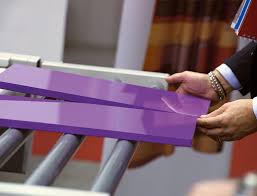
What Are UV Coatings for Plastics?
UV coatings for plastics are one of the most sophisticated surface, finishing methods that have found applications in the automotive, electronics, packaging, furniture, and construction industries, to name a few. Such coatings are recognized for their high performance, short curing times, and environmentally friendly elements. By understanding how UV coatings function and why they have become popular, both producers and users can gain access to a more comprehensive information base.
UV coatings are gels, or liquid compositions, that become solid immediately after they are exposed to ultraviolet light. In contrast with traditional coatings that depend on heat or air drying, UV coatings cure through a photochemical reaction. Once dried, the coatings produce a resilient, protective film on the plastic which also improves the aesthetic and functional qualities.
The coatings are developed with the purpose of sticking to plastic materials like ABS, PVC, polycarbonate, PET, acrylic, and polypropylene. Since plastics tend to be heat sensitive, UV curing is a very good choice as it works at lower temperature levels.
Moreover, this technology is not exclusively for plastic materials. UV curable coatings for wood are also extensively utilized in the furniture and flooring industries, thus showcasing the adaptability of this coating system to various materials.
Key Benefits of UV Coatings for Plastics
Industries mostly use UV coatings because of the:
Fast curing time: Coatings cure almost instantly, and production speeds can be increased.
Durability: Wonderful resistance to scratches, abrasion, and chemicals.
Appearance: High gloss, matte, or satin finishes can be provided.
Eco-friendliness: They are low or zero in VOC emissions compared to solvent-based ones.
Cost: Energy usage is reduced and there is minimal material waste.
UV curable coatings consist of photoinitiators that when exposed to UV light start a chemical change. This leads to the very fast polymerization, thus the liquid coating becomes a solid film in only a few seconds.
The result is an even, smooth, hard finish. Because of these advantages, UV coatings are considered to be one of the most dependable coatings for plastics and are extensively used in high-volume manufacturing settings.
Applications of UV Coatings in Plastics
UV coatings are found on a diverse range of plastic products such as:
Consumer electronics housings
Automotive interior components
Plastic furniture and decorative panels
Packaging materials
Medical and laboratory equipment
Optical and display components
They also help mitigate the yellowing, cracking, and surface degradation that occur result of sunlight exposure.
Future of UV Coatings for Plastics
UV coatings are increasingly preferred as the demand for environmentally friendly production methods grows. Constant innovations in formulation technology are improving the adhesion of UV coatings to problematic plastic surfaces and at the same time extending the applications to flexible plastics and 3D, printed components.
UV Coatings vs Traditional Plastic Coatings
Traditional coatings usuallow to dry and may emit harmful solvents to thintoatmosphere. UV coatings, by contrast, cure in an instant and give the surface a higher degree of hardness. In addition, they provide greater uniformity and fewer defects, which makes them a better choice for high,high-endtic products.


Leave a Reply
Want to join the discussion?Feel free to contribute!