
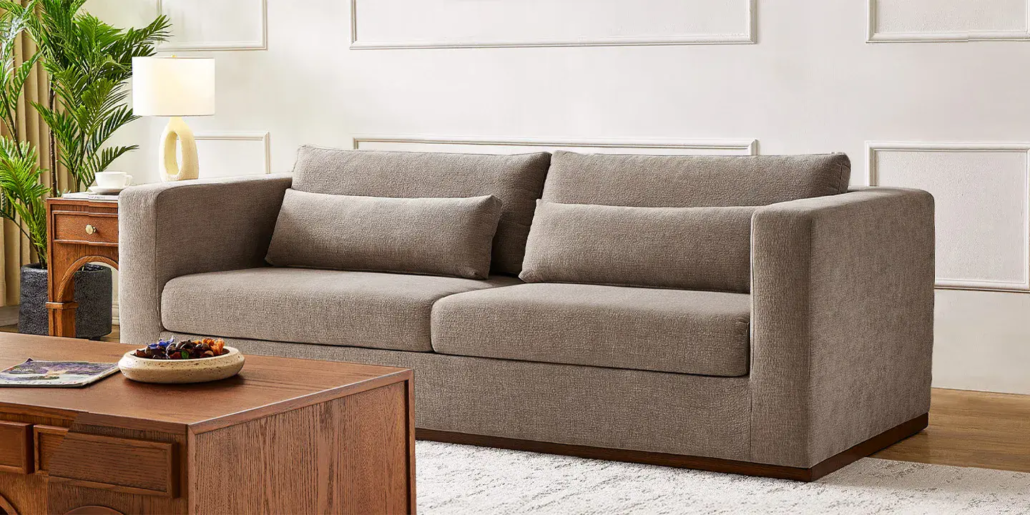
5 Common Mistakes to Avoid When Buying the Best Sofa Couch
Buying a sofa may seem straightforward, but it is one of the most common sources of regret in home furnishing. Many buyers focus on style or price and overlook factors that directly affect comfort, usability, and long-term value.
A sofa is typically used for several hours a day and often remains in the home for years. Choosing the wrong one can lead to poor layout, discomfort, or early replacement.
Understanding the most common mistakes can help you avoid these issues and choose the best sofa couch that truly fits your space and lifestyle.
Mistake 1: Choosing the Wrong Sofa Size for the Room
One of the most frequent problems is selecting a sofa that does not match the room dimensions.
A sofa that is too large can block circulation and make the space feel cramped. A sofa that is too small may look disconnected and fail to provide enough seating.
A practical rule is that the sofa should occupy no more than 60 to 70 percent of the main wall length. For example, in a room with a 3-meter (118-inch) wall, the ideal sofa width falls between 180 and 210 cm (71–83 inches).
It is also important to maintain at least 70 to 90 cm (28–35 inches) of walkway clearance. If this space is reduced, daily movement becomes uncomfortable.
The right approach is to measure the room carefully and evaluate the sofa within the full layout, not just against the wall.
Mistake 2: Ignoring Sofa Depth and Seating Comfort
Many buyers focus only on width and overlook depth, which has a direct impact on comfort and usability.
Standard sofa depth ranges from 85 to 100 cm (33–39 inches). In smaller rooms, choosing a depth above 95 cm can reduce usable space and limit movement.
Seat depth also affects posture. A depth of 50 to 60 cm (20–24 inches) supports upright sitting, while deeper seating above 65 cm (26 inches) is better for lounging.
Choosing the wrong depth can result in a sofa that looks good but feels uncomfortable for daily use. Matching depth to how you use the sofa is essential.
Mistake 3: Prioritizing Style Over Material Durability
A visually appealing sofa does not always perform well over time.
Fabric durability is often measured using the Martindale rub test. For daily residential use, a rating of at least 25,000 rubs is recommended. Lower ratings may lead to visible wear within a few years.
In high-use households, especially with kids or pets, materials rated 40,000 rubs or higher provide better longevity.
Leather offers durability but may show scratches, while standard fabrics can absorb stains if not treated.
Choosing materials based only on appearance often leads to higher maintenance and earlier replacement. The better approach is to balance design with measurable durability.
Mistake 4: Poor Layout Planning and Furniture Proportion
Even a well-sized sofa can fail if the layout is not planned correctly.
The distance between the sofa and the coffee table should typically be between 40 and 50 cm (16–20 inches). Less than 35 cm restricts movement, while more than 55 cm reduces usability.
The coffee table itself should be about 50 to 70 percent of the sofa width to maintain visual balance.
Ignoring these proportions can make the room feel either cramped or disconnected. Proper spacing ensures both comfort and functionality.
Mistake 5: Underestimating Long-Term Use and Lifespan
Many buyers choose a sofa based on short-term needs without considering how it will perform over time.
Lower-quality sofas may begin to lose shape within 2 to 4 years, especially if cushion density is below 30 kg/m³. Higher-quality sofas with better materials and construction can last 8 to 12 years or more.
Spending less upfront may seem cost-effective, but frequent replacement increases total cost over time.
When selecting a best sofa couch, it is important to consider not just the initial price, but also durability, maintenance, and expected lifespan.
Conclusion
Choosing the right sofa requires more than picking a design you like. It involves understanding how size, comfort, material, and layout work together in a real living space.
Avoiding common mistakes such as incorrect sizing, poor material selection, and lack of planning can significantly improve both comfort and long-term value.
A well-chosen sofa supports daily living and maintains its performance over time, making it one of the most important investments in any home.
Leave a Reply
Want to join the discussion?Feel free to contribute!